
The Way
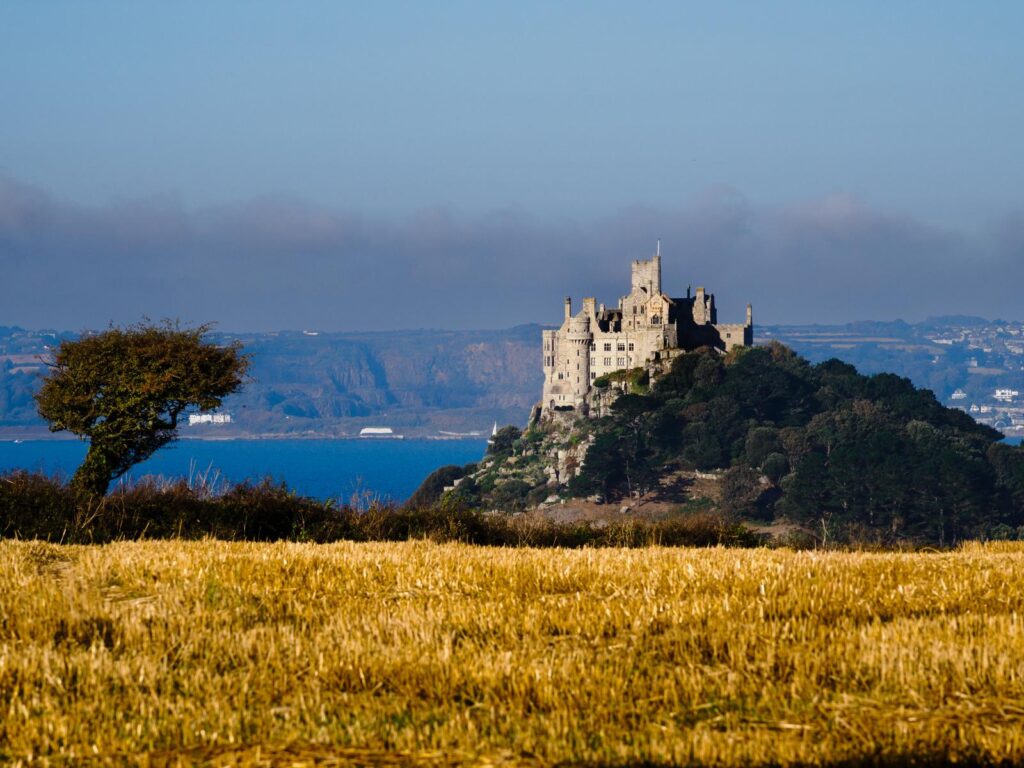
St Michael’s Way is a 12.5-mile pilgrimage route crossing Cornwall at its narrowest point, linking the north coast at Lelant with St Michael’s Mount on the south coast. It traverses the narrow neck of land that connects West Penwith to the rest of Cornwall.
The route follows an ancient crossing that has been used for trade and pilgrimage for thousands of years.
From prehistoric times, this route provided a practical alternative to the hazardous voyage around Land’s End. Bronze Age traders travelling between Ireland, Wales and continental Europe are thought to have crossed the peninsula, rather than risk the powerful tides, treacherous rocks, and howling winds off Cornwall’s westernmost tip. In later centuries, Celtic saints and medieval pilgrims followed the same way across the land.
For medieval pilgrims, the journey often culminated at St Michael’s Mount, one of the most important pilgrimage sites in southern Britain. During the fourteenth and fifteenth centuries, ships sailed from ports including Mount’s Bay, Fowey and Plymouth to Ferrol and A Coruña in north-west Spain, where travellers joined the routes leading to Santiago de Compostela and the shrine of St James. In this way, Cornwall formed part of a much wider network of pilgrimage stretching across Europe.
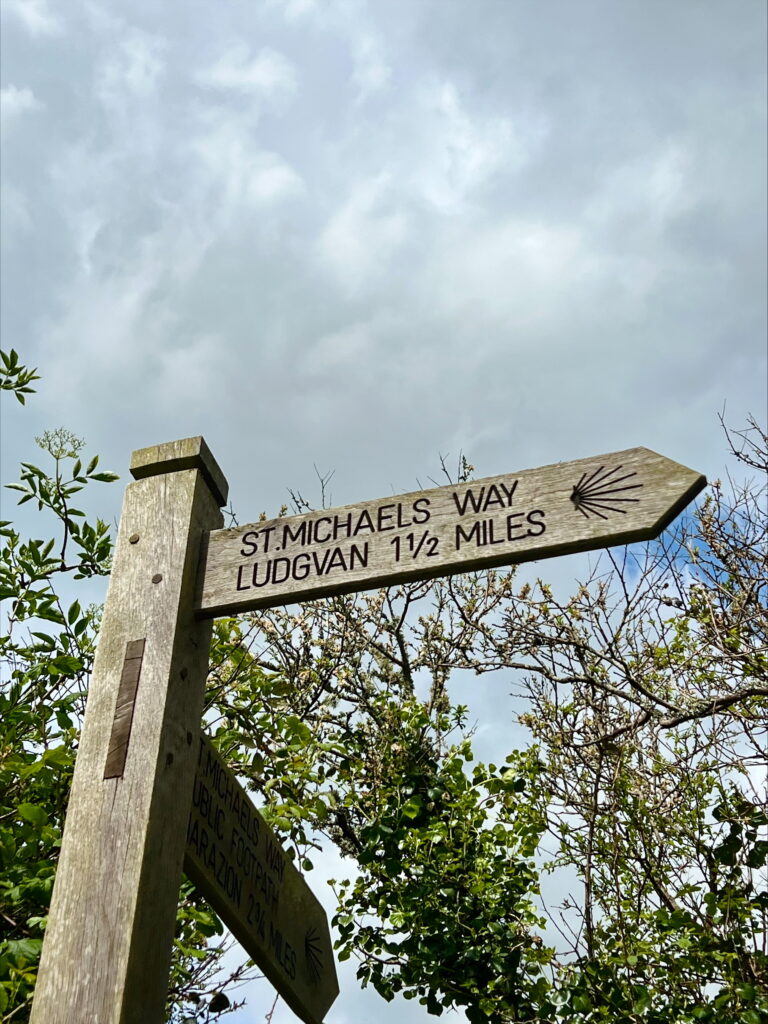
THE CAMINO INGLÉS
Today, St Michael’s Way is recognised as part of that historic tradition. It is officially linked to the Camino de Santiago network of routes which converge at Santiago de Compostela in Galicia, reasserting its medieval role as part of the Camino Inglés, Via Anglicana, or “English Way“. Used by pilgrims travelling from Britain to Spain, it remains one of the oldest pilgrimage routes connecting Britain and Santiago, and was the most popular route for English pilgrims. More information on its history can be found here.
THE MODERN WAY
The modern route was established in 1994 by Bredereth Sen Jago (the Cornish Pilgrims of St James), in partnership with Cornwall County Council and the Cornish Bureau for European Relations. Drawing on archaeological evidence, historical sources and medieval shipping records, the route was created to reflect as closely as possible the ancient route used by traders, saints, and pilgrims.
The way remains the only long-distance footpath in the UK to be designated as a European Cultural Route by the Council of Europe.
In 2016, following work by the Friends of St Michael’s Way and the Confraternity of St James, the route gained recognition from the authorities in Santiago de Compostela, allowing walkers to count the distance towards the 62miles/100km required to obtain a Compostela pilgrimage certificate. The Friends of St Michael’s Way have also produce a pilgrimage passport, enabling walkers to record their journey, collect stamps along the route, and provide evidence to qualify towards a Compostela.