
The Camino Inglés
St Michael’s Way forms part of a much wider story of medieval pilgrimage. For centuries, pilgrims from Britain and northern Europe crossed Cornwall on their way to Santiago de Compostela in north-west Spain, joining what became known as the Camino Inglés or ‘English Way’.
A Pilgrimage Across Land and Sea
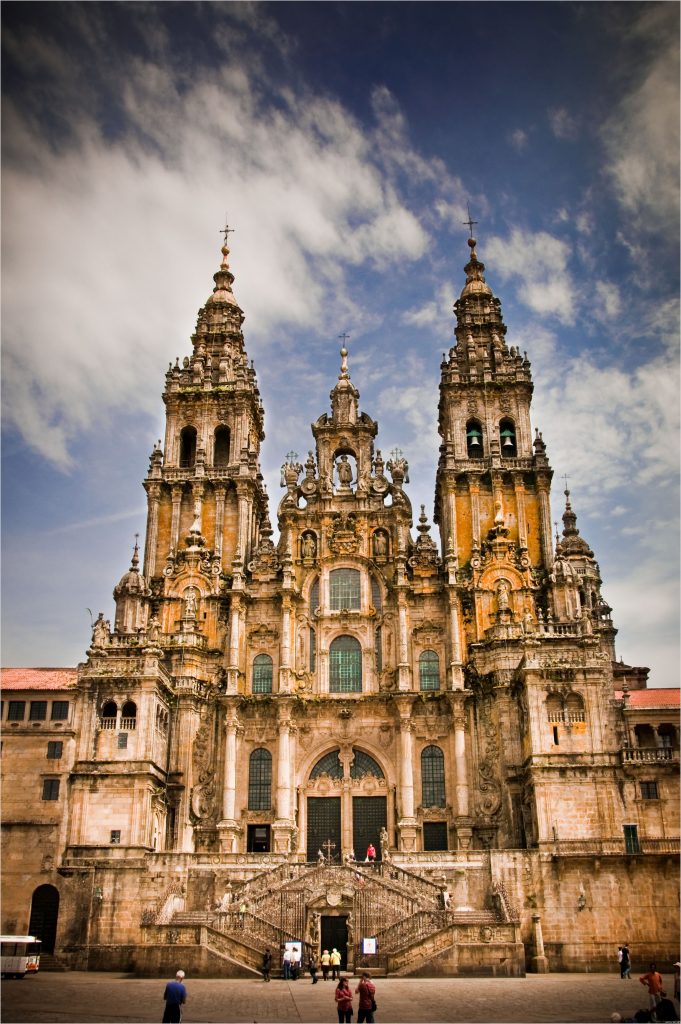
Pilgrimage to the shrine of St James at Santiago de Compostela began soon after the discovery of his tomb in the ninth century. By the 12th and 13th centuries, Santiago had become one of the three great pilgrimage destinations, alongside Rome and Jerusalem.
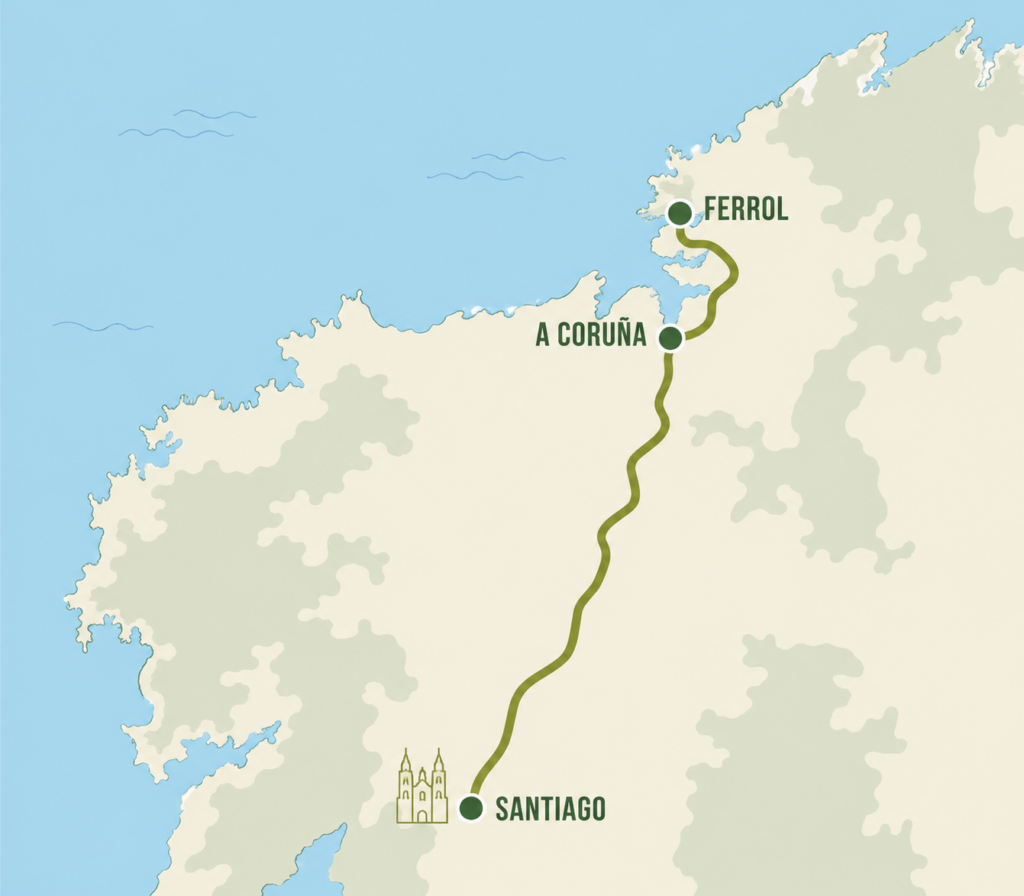
While many pilgrims travelled overland through France, those from Britain, Ireland and northern Europe often chose the sea route. Although the voyage across the Bay of Biscay could be dangerous, it was considerably quicker than spending many months travelling across the continent.
Ships sailed from ports around Britain—including Bristol, Dartmouth, Plymouth, Fowey and Southampton—as well as from Ireland, Scotland, Scandinavia and the Low Countries, crossing to the Galician ports of A Coruña and, later, Ferrol. From there, pilgrims continued on foot to Santiago de Compostela along the Camino Inglés.
Cornwall’s Place in the Camino
For many medieval pilgrims, the journey began long before. Travellers from across Britain made their way south-west towards Cornwall, where they gathered at ports around Mount’s Bay before sailing to Galicia.
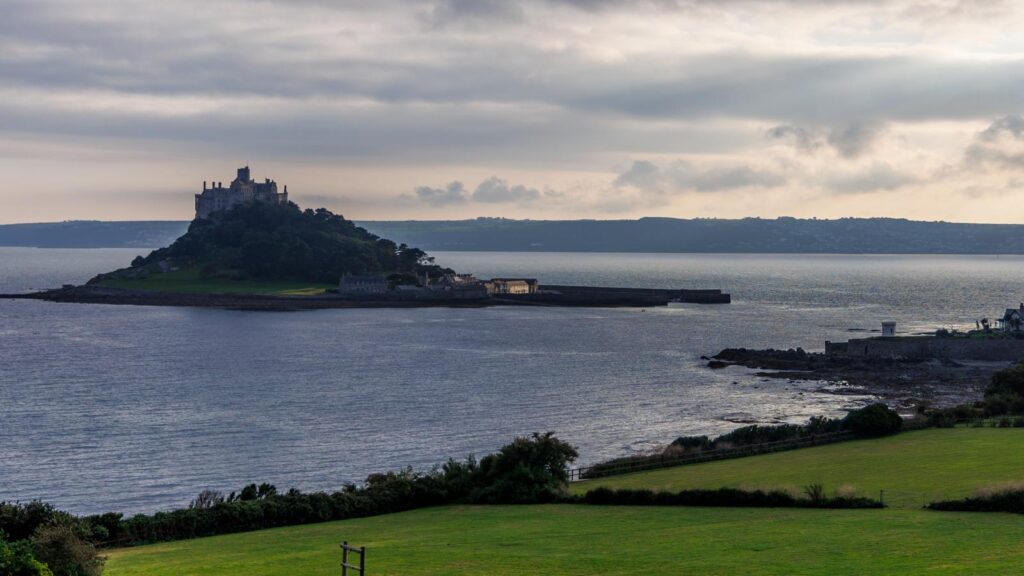
St Michael’s Way provided an important overland crossing between the north and south coasts of Cornwall. Rather than risk the dangerous waters around Land’s End, travellers crossed the peninsula on foot from Lelant to St Michael’s Mount, continuing their journey from the sheltered harbours of Mount’s Bay.
In this way, St Michael’s Way formed part of a much larger European network of pilgrimage routes linking Britain with Santiago de Compostela.
More Than an English Route
Despite its name, the Camino Inglés was never used exclusively by English pilgrims. Historical records show that Scots, Irish, Welsh, Scandinavians, Flemings and pilgrims from across northern Europe all travelled this maritime route to Santiago.
The name reflects the route’s principal point of departure rather than the nationality of everyone who walked it.
The Camino Inglés Today
After declining during the eighteenth century, pilgrimage to Santiago experienced a remarkable revival during the late twentieth century. Today the Camino Inglés is once again a thriving pilgrimage route, with 15,780 walkers completing it in 2019. It offers walkers a quieter and more intimate alternative to some of the better-known Camino routes, such as the much busier Camino de Francés, or ‘French Way’.
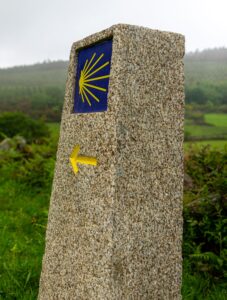
In recognition of the historic connections between Cornwall and Galicia, St Michael’s Way was formally linked with the Camino Inglés in 2016. Walkers who complete St Michael’s Way before continuing their pilgrimage in Spain may count the Cornish section towards the distance required to obtain a ‘Compostela’, the official certificate issued by the Cathedral of Santiago de Compostela.
The Friends of St Michael’s Way also produce an official Pilgrim Passport, allowing walkers to collect stamps along the route and record the Cornish stage of their pilgrimage before continuing on the Camino Inglés.
For practical information about walking the Camino Inglés today, including route planning, accommodation and itineraries, visit the official Camino Inglés website.